The history of Jewish life in Morocco spans over two millennia, marked by periods of coexistence, cultural flourishing, and occasional challenges. Fez, in particular, has been a central hub of Jewish culture, scholarship, and commerce in Morocco, playing a vital role in the broader Jewish diaspora.
Early Settlement and Medieval Flourishing
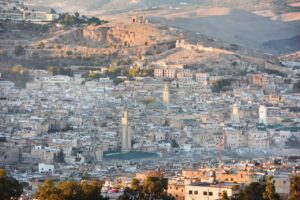
Jewish communities have been present in Morocco since at least Roman times, with some traditions suggesting they arrived even earlier. The city of Fez, founded in the 9th century by Idris I, soon became a haven for Jewish refugees fleeing persecution in other parts of the world, particularly from the Iberian Peninsula. By the 10th century, Fez was home to a vibrant Jewish community, contributing significantly to the city’s cultural and economic life.
In the medieval period, Fez became a renowned center of Jewish learning. The city hosted prominent rabbis, scholars, and poets, including the famed Rabbi Isaac Alfasi in the 11th century. Jewish scholars in Fez were deeply engaged in the study of religious texts, philosophy, and science, often in collaboration with their Muslim counterparts, leading to a rich intercultural exchange.
The Mellah of Fez
The establishment of the Mellah, the Jewish quarter, in Fez in the 15th century marked a significant chapter in the history of Moroccan Jewry. Located near the Royal Palace, the Mellah became a bustling center of Jewish life, with synagogues, schools, and vibrant markets. The creation of the Mellah was partly a response to increasing tensions and the need for protection, as well as a reflection of the broader societal structures in medieval Morocco.
Despite the segregation, the Jews of Fez maintained a significant degree of autonomy, governed by their own leaders and laws. They played vital roles in trade, craftsmanship, and finance, contributing to the economic prosperity of the city. The Mellah of Fez was also notable for its architectural beauty, with distinctive houses featuring wrought iron balconies and intricate woodwork.
Cultural and Religious Contributions
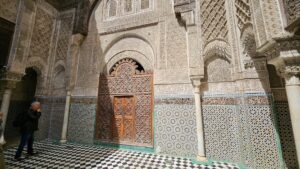
Fez was a spiritual and cultural beacon for Moroccan Jews. The community preserved ancient traditions and developed unique religious customs that distinguished Moroccan Jewry from other Jewish communities worldwide. The city was home to numerous synagogues, the most famous of which is the Ibn Danan Synagogue, built in the 17th century and still standing as a testament to the enduring Jewish heritage of Fez.
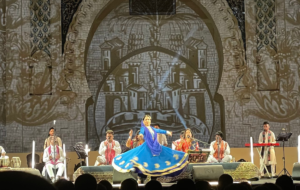
The Jews of Fez also made significant contributions to Moroccan music, language, and cuisine. Ladino, a Judeo-Spanish language, was widely spoken among Moroccan Jews, blending elements of Spanish, Hebrew, and local Arabic dialects. Jewish musicians in Fez played a crucial role in the development of Andalusian music, a genre that remains a cornerstone of Moroccan cultural heritage.
Modern Era and Emigration
The 20th century brought profound changes for the Jewish community in Fez and across Morocco. The arrival of French colonial rule in the early 1900s led to new opportunities for education and integration, but also to increased emigration as Jews sought better economic prospects abroad. The creation of the State of Israel in 1948 and subsequent regional conflicts further accelerated Jewish emigration from Morocco.
By the mid-20th century, the Jewish population of Fez had dramatically declined, as many moved to Israel, France, Canada, and other countries. Today, only a small number of Jews remain in Fez, but the legacy of their long and rich history is still visible in the city’s architecture, culture, and memories.
Preserving the Legacy
Efforts are underway to preserve the Jewish heritage of Fez and Morocco. Restorations of synagogues, cemeteries, and the Mellah are part of broader initiatives to honor the historical Jewish presence in the city. Festivals, exhibitions, and academic research continue to explore and celebrate the unique contributions of Moroccan Jews, keeping their legacy alive for future generations.
The history of Jewish life in Fez is a testament to the enduring spirit of a community that has shaped, and been shaped by, the broader Moroccan society. It reflects a narrative of resilience, cultural exchange, and the timeless connection between the Jewish people and the city of Fez.